Digital-first CDMO onboarding
When a clinical-stage gene therapy company came to Viralgen with an ambitious AAV program and an unforgiving timeline, every week of delay risked widening the gap between patients with genetic diseases and the therapies that might change, or even save, their lives.
The compressed timeline also posed a familiar challenge for Viralgen: how do CDMOs like us onboard new clients quickly, without sacrificing quality, while ensuring we can get therapies to patients faster?
Onboarding is a complex task, complicated by scattered spreadsheets, unstructured documents, version conflicts, and the meeting-heavy reviews traditionally used in tech transfers.
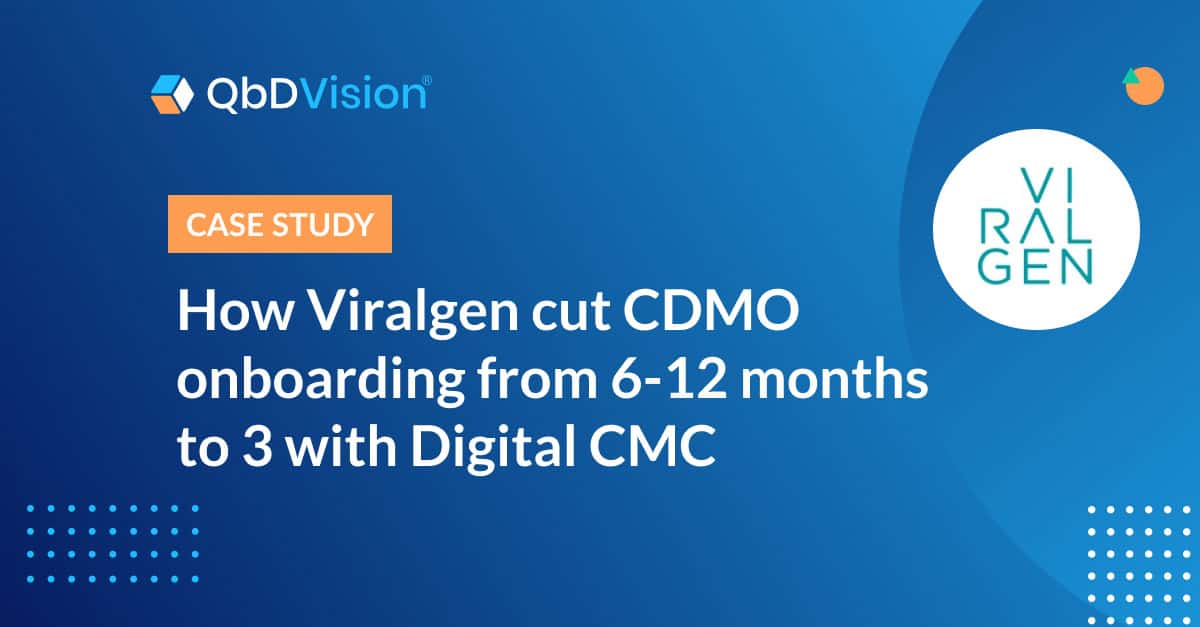
To help expedite their onboarding, Viralgen unified Digital CMC data into a trusted, digital knowledge platform to pre-build their client’s process in a structured workspace. From the very first day, both Viralgen and their partner could collaborate in real time, with process maps, quality templates, and risk assessments already in place. The onboarding process, which typically took between 6-12 months, was completed in a fraction of the time, in just 3 months, thanks to alignment across all teams.
Below we explain how Viralgen used structured digital readiness to de-risk tech transfer and provide competitive differentiation in CDMO partnerships.
The challenge: How to compress CDMO onboarding times without compromising quality
At Viralgen, past onboarding projects were slowed by:
- Manual tools like Excel leading to lost versions and misalignment
- Documents being shared back-and-forth without centralized version control
- Difficult to visualize process logic or dependencies in flat files
- Inefficient collaboration among 20+ stakeholders across functions
Viralgen saw an opportunity to transform their approach and boost client confidence, and used structured templates, including QTPPs and CQA lists, to establish a shared digital workspace, giving both teams a single source of truth while enabling real-time alignment.
The solution: A unified digital platform enabling rapid onboarding and commercial readiness
Viralgen deployed QbDVision as the backbone of their onboarding process, bringing structure, transparency, and efficiency to every phase of the tech transfer.
Viralgen had already compiled extensive platform knowledge such as process descriptions, CQA classifications, and risk-based evaluations, into QbDVision. This allowed them to enter an initial workshop with a fully structured baseline. Over a focused three-day session, the two teams jointly reviewed the pre-built CQA risk assessment, layering in product-specific knowledge provided by the client. By the end of the workshop, the combined team had successfully generated a complete, product-specific CQA risk assessment, all updated live within QbDVision.
To finalize risk alignment, Viralgen then scheduled an in-person failure mode and effects analysis (FMEA) workshop early in the onboarding process. Using QbDVision, Viralgen and the client could work through the process together, spotting potential failure points, dependencies, and identifying ways to handle issues as they came up. QbDVision’s platform came preloaded with tailored QTPP templates, CQA classifications, and a visual process tree, allowing Viralgen to quickly adapt and align workflows with the client’s program. Here’s how it worked:
-
Pre-built platform processes and templates
Viralgen began with a pre-configured digital process model in QbDVision, complete with CQA classifications, risk assessments, and QTPP templates tailored to AAV products.
-
Rapid client engagement
The client team received ready-to-use QTPP and risk assessment templates, which they completed and returned within days, not weeks.
-
Dynamic process adaptation
Viralgen’s team customized their process tree, removing non-relevant unit operations and visualizing dependencies directly in the QbDVision interface.
-
Digital risk alignment
A live, in-person FMEA workshop was scheduled to finalize alignment, supported by shared data and structured logic already in the platform.
By the end of the FMEA workshop week, Viralgen and the sponsor had a complete set of potential critical process parameters and key parameters, all readily exportable for internal and client review. They also aligned on follow-up actions that would define the process characterization scope and guide refinement of the draft control strategy.
In total, Viralgen completed both the CQA risk assessment and the process FMEA in under two weeks, with the acceleration enabled by pre-compiled platform knowledge and real-time digital collaboration within QbDVision. All outputs remained interconnected within a single system, ensuring that future data could seamlessly update the same models and risk structures.
The results: Confidence, control, and compressed timelines
In gene therapy, every day counts. By standardizing documentation, templates, and reporting, teams achieved faster alignment across functions, improved transparency, and strengthened partner confidence.
These efficiencies didn’t just save time, they also created a scalable model for future technology transfers, enabling Viralgen to deliver therapies to patients sooner and respond to evolving market demands with greater agility.
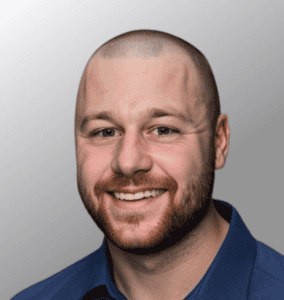
“Ultimately, what we could provide to the client was an accelerated commercial manufacturing readiness using the knowledge we already had at Viralgen and QbDVision was the tool that helped us leverage this information.”
Ane Quesada, PhD, Senior Scientist, MSAT, Viralgen
A single source of truth for truth for Digital CMC also eliminated the disparate document drama that typically bogs down tech transfers. All platform knowledge, client-provided data, risk linkages, and workshop updates lived in QbDVision, editable in real time and visible to every SME involved. This eliminated document juggling, reduced the chance of version conflicts, and ensured consistent alignment across teams.
- Onboarding timeline reduced from 6-12 months to just 3 months
- Zero lost versions or conflicting edits due to centralized version control
- Increased partner confidence, thanks to professional, pre-built frameworks
What once required months of manual updates, redundant reviews, and the kind of recurring meetings that drain hours better spent on actual science, instead took only a few structured working sessions, each anchored by a shared, digital source of truth in QbDVision.
Structured to scale: A new standard for CDMO collaboration
Beyond the immediate project, the QbDVision framework provides Viralgen with a repeatable onboarding process. Every new client can now start from a standardized, validated process tree with pre-aligned quality and risk structures, reducing redundancy, minimizing errors, and ensuring rapid alignment across teams. This scalability transforms each onboarding from a unique challenge into a predictable, efficient workflow.
Viralgen is already exploring ways to extend access to viewing licenses for CDMO partners and to integrate this model into other departments.
The takeaway: Turning urgency into confidence
With structured knowledge, shared visibility, and data-driven collaboration, Viralgen transformed a historically manual process into a digital success story.
“It’s proof of the power of putting structure first. From the very first walkthrough, the client could see that we were ready to start work: We weren’t just presenting a plan, we were ready to execute it. QbDVision makes tech transfers feel less like a handoff and more like a hand-in-glove fit.”
Isabel Guerrero, MSAT Senior Scientist, Viralgen
By the numbers: Viralgen’s onboarding transformation
|
Metric |
Before QbDVision |
With QbDVision |
|
CDMO onboarding timeline |
6-12 months |
~3 months |
|
Process visibility |
Fragmented across Excel files |
Centralized in QbDVision |
|
Version control |
Manual and error-prone |
Digital, traceable, real-time |
|
Stakeholder alignment |
Meeting-intensive |
Seamless digital collaboration |
|
Client confidence |
Variable |
Strong, immediate trust |
Before adopting the platform, onboarding a new CDMO took anywhere from 6 to 12 months, with teams juggling multiple Excel files, version mismatches, and lengthy review meetings.
With QbDVision, that same process now takes roughly three months. All key process data, QTPPs, CQAs, and risk assessments, live in a single, structured workspace where every update is traceable in real time. Instead of chasing edits and reconciling conflicting versions, teams focus on meaningful collaboration, while clients gain instant confidence seeing their program managed through a transparent, well-organized digital system.
A new digital standard for CDMO partnerships
Viralgen’s collaboration with QbDVision demonstrates how structured data and digital tools can compress timelines, improve quality, and strengthen partnerships across the gene therapy ecosystem.
The shift from a document-centric approach to a knowledge-centric model provides multiple long-term strategic advantages for CDMOs. With structured and centralized process knowledge, critical CMC information can be preserved during workforce transitions, site expansions, or even personnel changes, preventing silent, and often very costly, knowledge drains within an organization.
As you can see in our case study with Viralgen, standardized and repeatable onboarding frameworks allow CDMOs to accelerate new client programs while maintaining consistency and scientific rigor. Full traceability and integrated risk mapping enhance regulatory readiness, ensuring that every process decision is documented, verifiable, and defensible. Additionally, this approach creates a scalable operational model that can be applied across multiple partners, therapeutic modalities, and manufacturing sites, delivering faster alignment, improved transparency, and stronger partner confidence.
But that’s not all. By providing contextualized, structured knowledge rather than disconnected data points, knowledge-centric Digital CMC approaches can also provide a strong foundation for AI-driven initiatives enabling CDMOs to leverage advanced analytics.
By adopting a knowledge-centric, digital infrastructure, CDMOs can position themselves to meet the growing demands of complex gene therapy programs, respond effectively to market and regulatory pressures, and accelerate the delivery of life-changing therapies to patients.
GET IN TOUCH
Ready to accelerate your own CDMO collaborations?
Reach out to learn how QbDVision is helping organizations like Viralgen transform onboarding from a bottleneck into a breakthrough.