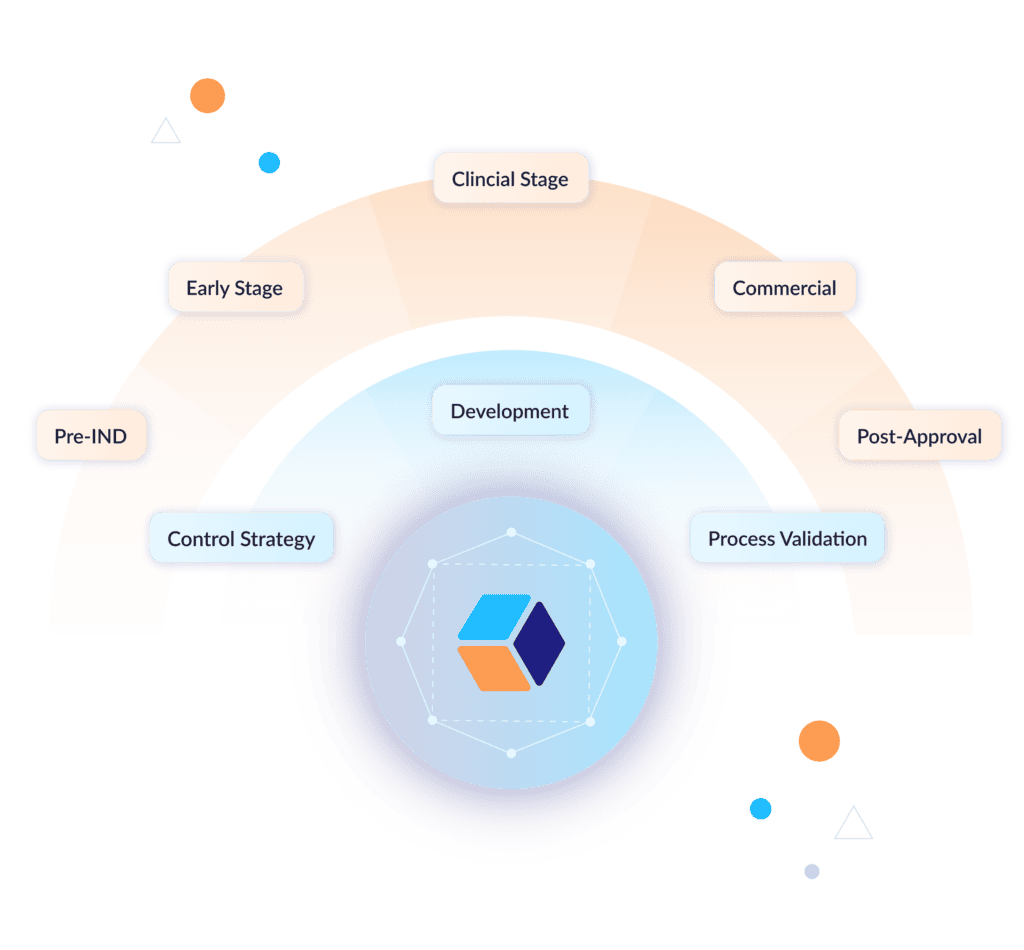
The structured Digital CMC platform for end-to-end product lifecycle management
QbDVision’s category-leading Digital CMC platform is a new operating model for how CMC knowledge is structured, governed, and applied across the product lifecycle.
THE CHALLENGE
Out of drug development adversity comes digital opportunity
Chemistry, Manufacturing, and Controls (CMC) has always been a foundational function of pharmaceutical and biotech product development: the long-but-essential path by which safe, effective, quality medicines are delivered to patients. But the unstructured, document-centric systems that have traditionally been used to manage end-to-end CMC data don’t live up to the challenges present in today’s CMC landscape.
And those challenges are many. Regulatory modernization demands structured, justified, transparent technical packages. Increasingly complex modalities produce volumes of data and interdependencies that legacy tools can’t handle, while global development networks magnify coordination risk.
Legacy data management systems are no longer sufficient to handle the scale, speed, and scientific depth required of today’s drug development processes. But with these challenges comes an opportunity to move away from those inefficient systems to more efficient digital structures that drive transparency, collaboration, and agility throughout the entire product lifecycle.

CMC doesn’t have to be document-centric
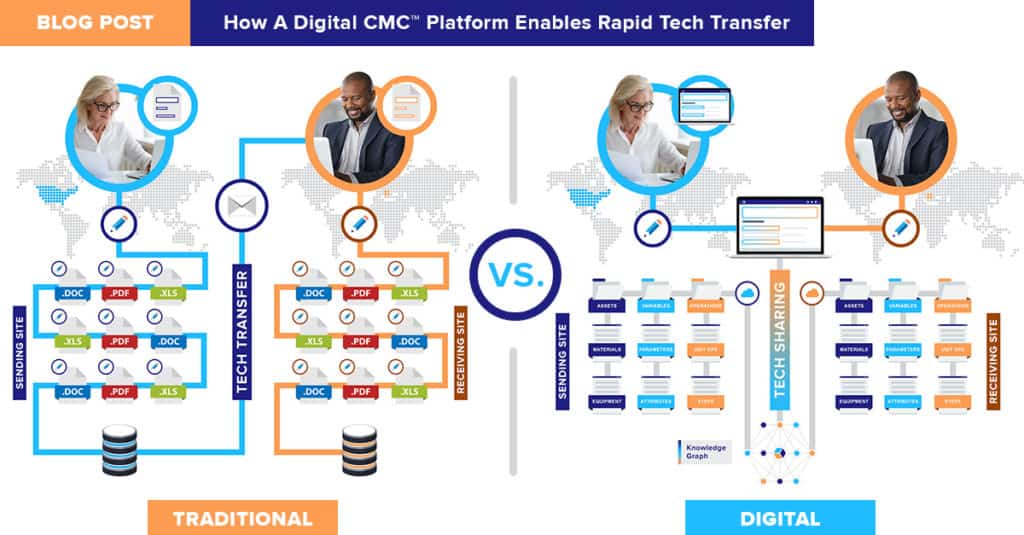
Historically, CMC data has been buried in documents and spreadsheets that are stored across file servers, quality management systems, and databases. CMC knowledge is dispersed and hard to find, data utilization and integrity are poor, preparation of regulatory submissions and tech transfers are cumbersome, and product lifecycle management is reactive.

This looks like
Disconnected folders and tools
Manual interpretation of results
Untraceable rationale and risk decisions
Hard-to-find data buried in documents
Minimal lifecycle visibility
These approaches
Lack structured context
Mask relationships between decisions and outcomes
Impede workflow integration
Prevent machine-readable governance
The Solution
The first and only true Digital CMC software
Digital CMC isn’t a collection of tools, it’s a new operating model for how CMC knowledge is structured, governed, and applied across the product lifecycle. QbDVision treats CMC knowledge as connected, dimensional, and contextualized information sets that can be assembled, queried, and evolved over time, weaving previously disconnected data threads into a digital fabric.
We don’t just digitize documents or optimize isolated workflows, we digitize scientific knowledge itself. Our platform captures parameters, attributes, risks, and justifications as structured, connected, lifecycle-aware knowledge, creating a single, governed source of truth that spans product, process, method, transfer, validation, and post-approval change.
Built from the ground up to align with ICH Q8–Q12, Q14, and ALCOA+ principles, QbDVision enables organizations to move from document-driven execution to a scalable, inspection-ready, and future-proof Digital CMC operating model.
The keys to Digital CMC
Knowledge-first architecture
Organize technical data, parameters, attributes, and relationships into connectable entities. This converts isolated outputs into a knowledge fabric that teams can trust and reuse.


Lifecycle integration
Ensure that information flows seamlessly from early discovery through development, tech transfer, validation, and commercial operations while maintaining context and traceability.
Digital process orchestration
Capture workflows in digital formats that can be tracked, automated, and analyzed, including risk assessments, justifications, and decision logs.
Information governance and standards
Define taxonomy, metadata standards, and governance protocols that ensure data integrity and regulatory readiness.
Ecosystem integration
Connect Digital CMC capabilities with systems like LIMS, ELN, MES, and QMS, to extend visibility and deliver actionable insights.
Make your document-based workflows history
Our data-centric approach to CMC moves away from inefficient, document-centric frameworks to efficient digital structures that drive transparency, agility, and collaboration.
Before QbDVision
Siloed documents
Manual, untraceable decisions
Poor knowledge reuse
Slow coordination and rework
With QbDVision
Connected knowledge architecture
Contextualized, traceable decisions
Lifecycle visibility and reuse
Scalable workflows and reduced risk
Digital CMC unlocks transformational value
Accelerated development timelines
Reduced transfer failures and repetition
Improved compliance readiness
Higher quality decision-making
Greater cross-functional alignment
Traceability and audit confidence
This is not a moment, it’s the movement
Digital CMC isn’t a tech trend, it’s a strategic discipline that transforms CMC from a set of legacy workflows into an integrated, knowledge-driven, lifecycle-first engine for high-performance drug development.
United structured knowledge, lifecycle context, collaborative processes, and connected systems that modernize how technical development functions, how teams collaborate, and how decisions are made across modalities and stages.
“Ultimately, traditional data management methods and the Digital CMC approach are two different ways to accomplish similar goals: capturing, organizing, and curating program data. The big difference: only one of these approaches makes that data easily accessible, searchable, visualizable, and more.”
Dr. Yash Sabharwal
Co-founder & CEO
QbDVision
Dive deeper with our CMC thought leaders
MORE INSIGHTS
Take a deep-dive with QbDVision Co-Founder & CEO, Yash Sabharwal.
MORE INSIGHTS
See how Bayer digitized a complex tech transfer with QbDVision, accelerating timelines, improving collaboration, and ensuring regulatory confidence.