Risk Ranking for Product Quality Attributes
Since its inception, QbDVision has integrated risk assessment functionality into its core. Risk related relationships help build the connective in our knowledge graph.
At the product level, requirements are classified as final quality and performance attributes and the risk assessment focus has been on allowing users to assign composite impact (severity) and uncertainty (likelihood) scores to determine a composite criticality value for each quality attribute. This is akin to a preliminary hazard analysis (PHA) as defined by ICH Q9.
The introduction of risk ranking coupled with the ability to define General Attributes expands the product risk assessment capability of QbDVision dramatically, especially for biologics product development.
What’s changing
The QTPP functionality also allows for a more granular risk assessment of Final Quality Attributes (FQA). This allows you to conduct a risk assessment relative to specific safety and efficacy elements of the drug product or drug substance per ICH Q8 and ICH Q9 guidelines, for example. The risk ranking system is built around our General Attribute structure.
Why is this happening
The new risk ranking functionality within QbDVision simplifies the application of this risk assessment methodology.
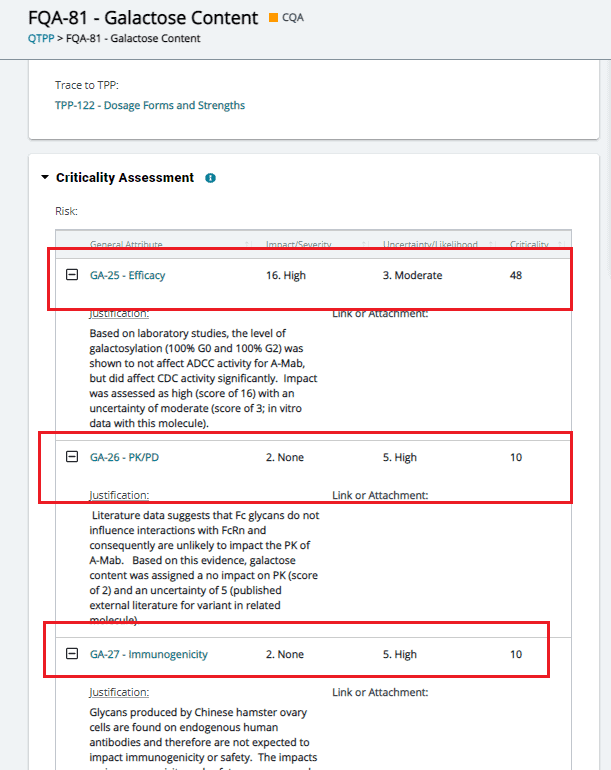
In the world of biologics product development, for example, it is often desired to risk rank an FQA against multiple safety and efficacy criteria such as bioavailability, PK/PD, and immunogenicity and then assign the maximum of these as the risk level for the CQA.
This approach is discussed in detail in the A-mAb Case Study and an example is given below for the assessment of Aggregation in the upstream project of the case study.
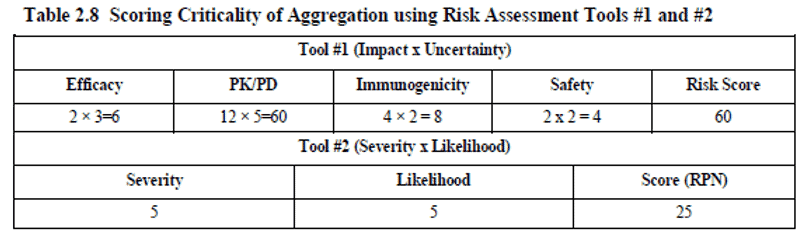
In this example, Tool 1 is the Risk Ranking approach now available in QbDVision, and Tool 2 is the PHA approach that has been the standard in QbDVision since the beginning.
How do I use it?
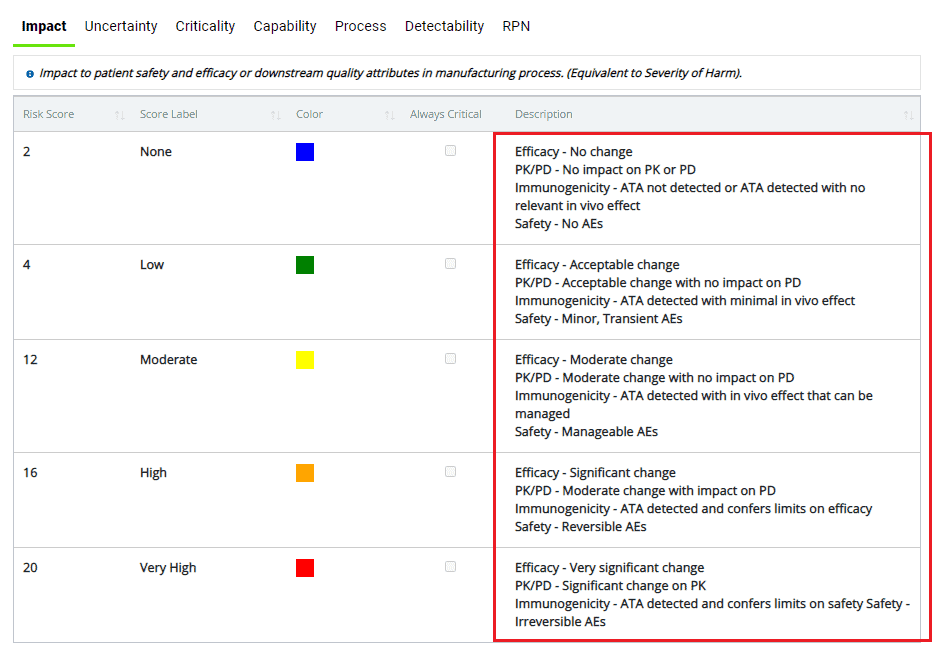
Step 1: Adjust your level-based definitions for Impact within your defined risk management plan (RMP)
Step 2: Set your project to use Risk Ranking instead of PHA
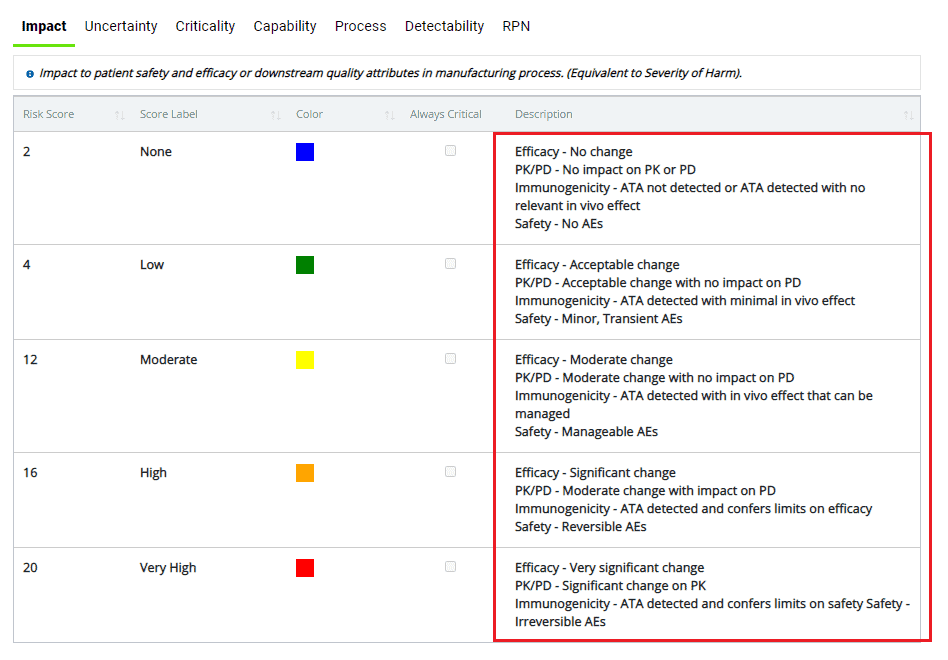
Step 3: Add the specific risk assessment criteria (e.g. Safety, Efficacy, PK/PD, Immunogenicity) to the project QTPP as General Attributes
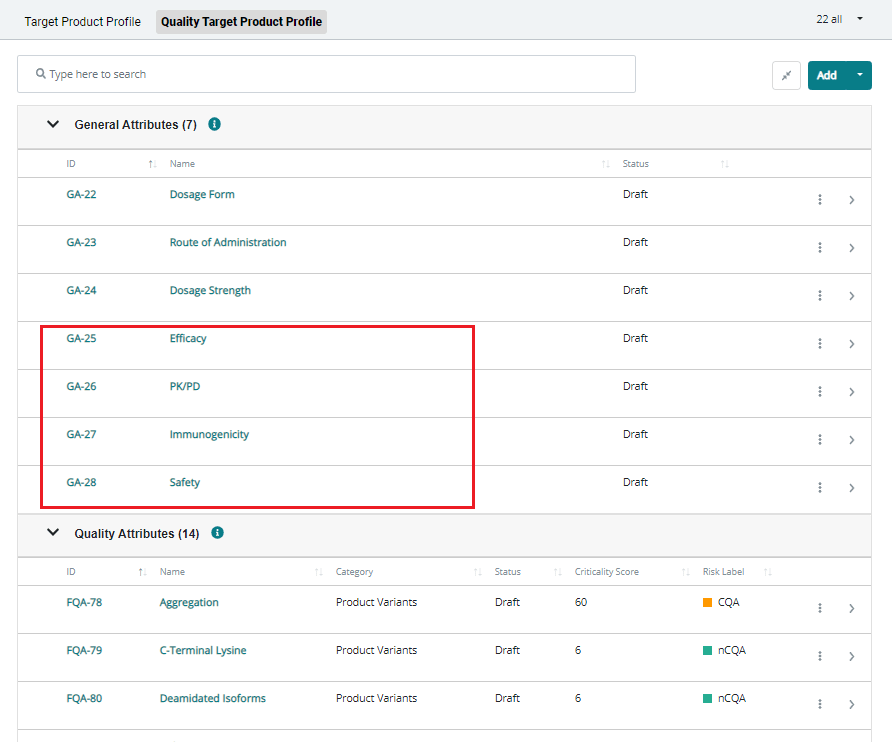
Step 4: Start linking the Quality Attributes to the General Attributes
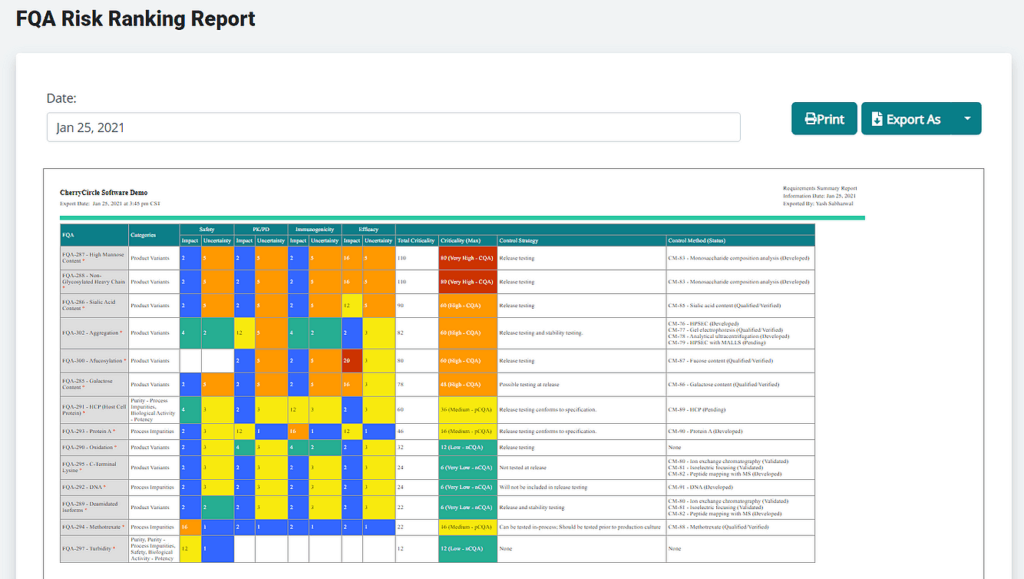
Step 5: Get your automated reports to summarize the results
Availability
Risk ranking support is available today in our standard and sandbox environments. Our validated product customers will see it in the Electronica release, expected in February of 2021.

President, CEO, Co-Founder
Yash Sabharwal
Yash Sabharwal is an accomplished inventor, entrepreneur, and executive specializing in the funding and growth of early-stage technology companies focused on life science applications. He has started 3 companies and successfully exited his last two, bringing a wealth of strategic and tactical experience to the team.