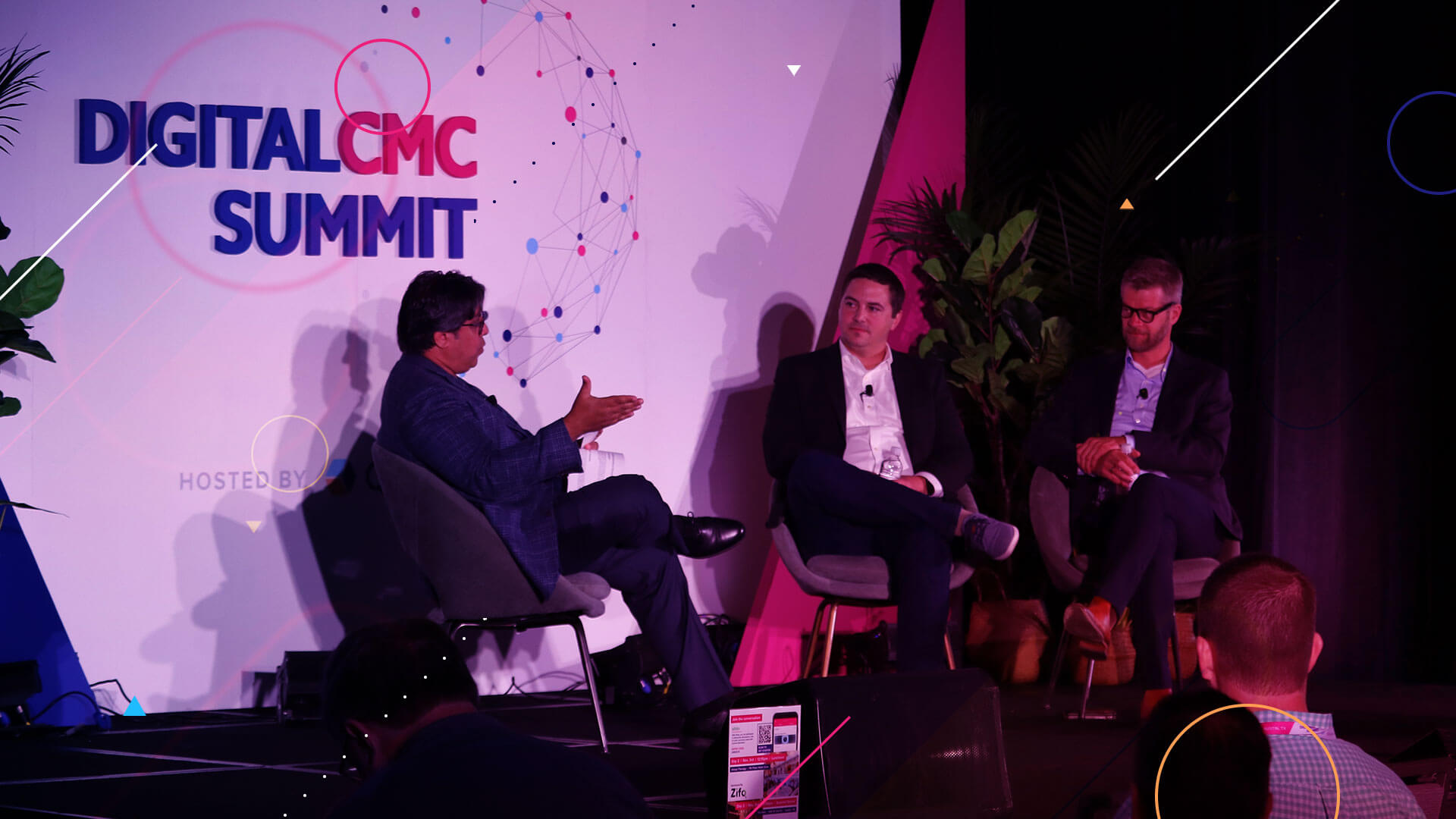
Driving Efficiency in CMC Operations | Digital CMC Summit | Panel Discussion
Why leaders seeking to digitize CMC operations should focus more on people, not technology.
How to identify smart, strategic use cases that can become your digital CMC beachheads.
Why aggressive goals are critically important to successful transformation initiatives.
How to create a strategy for scaling focused deployments into organizational solutions.
Digitizing CMC operations: Start small, think big, scale fast
At the start of any transformation initiative, every CMC leader has to ask the same critical question: “Where do we begin?”
At the 2022 Digital CMC Summit, we put that question to Oliver Hesse, a digital transformation leader for Bayer Pharmaceuticals, and Chris Kopinski, an expert in data science-powered business solutions for AWS.
For these two transformation veterans, the answer for most organizations is to start with a specific, high-value use case — but to do so with a plan for how that discrete solution can expand into other workflows, and domains.
As Oliver points out in this in-depth discussion, many organizations try to transform all their CMC operations at once — only to hit “this won’t work for us” resistance from operational silos. Other programs successfully implement valuable point solutions, but fail to show how they’re relevant beyond a specific workflow or unit operation.
Smart transformation strategies, Chris adds, have a multi-step plan for delivering, promoting, and scaling the value of new digital solutions. Silos are a real challenge for most pharma and biotech companies, he points out. If you’re going to guide them through the transformation process, your strategy needs to focus more on the people who work in those groups — and what they need to hear, feel, and believe to align with a new vision for the CMC operations they contribute to.
So what does that strategy need to achieve that impact? Both Oliver and Chris agreed that it comes down to three critical factors:
- Responsive leaders committed to interdisciplinary collaboration
- Aggressive goals that keep stakeholders focused and engaged
- Sustained training that helps users gain the confidence to adapt to new tools
Together, these factors give transformation programs the momentum they need to build interest in a first use case, deliver validating results as efficiently as possible, and continue gaining traction with more users and units.
Want to learn more about how to build a successful transformation strategy that takes your CMC operations to a new level of performance? Sign up to watch this full session — along with five more — from an incredible cast of experts from across the industry.
Session speakers


We’re here to help you deliver